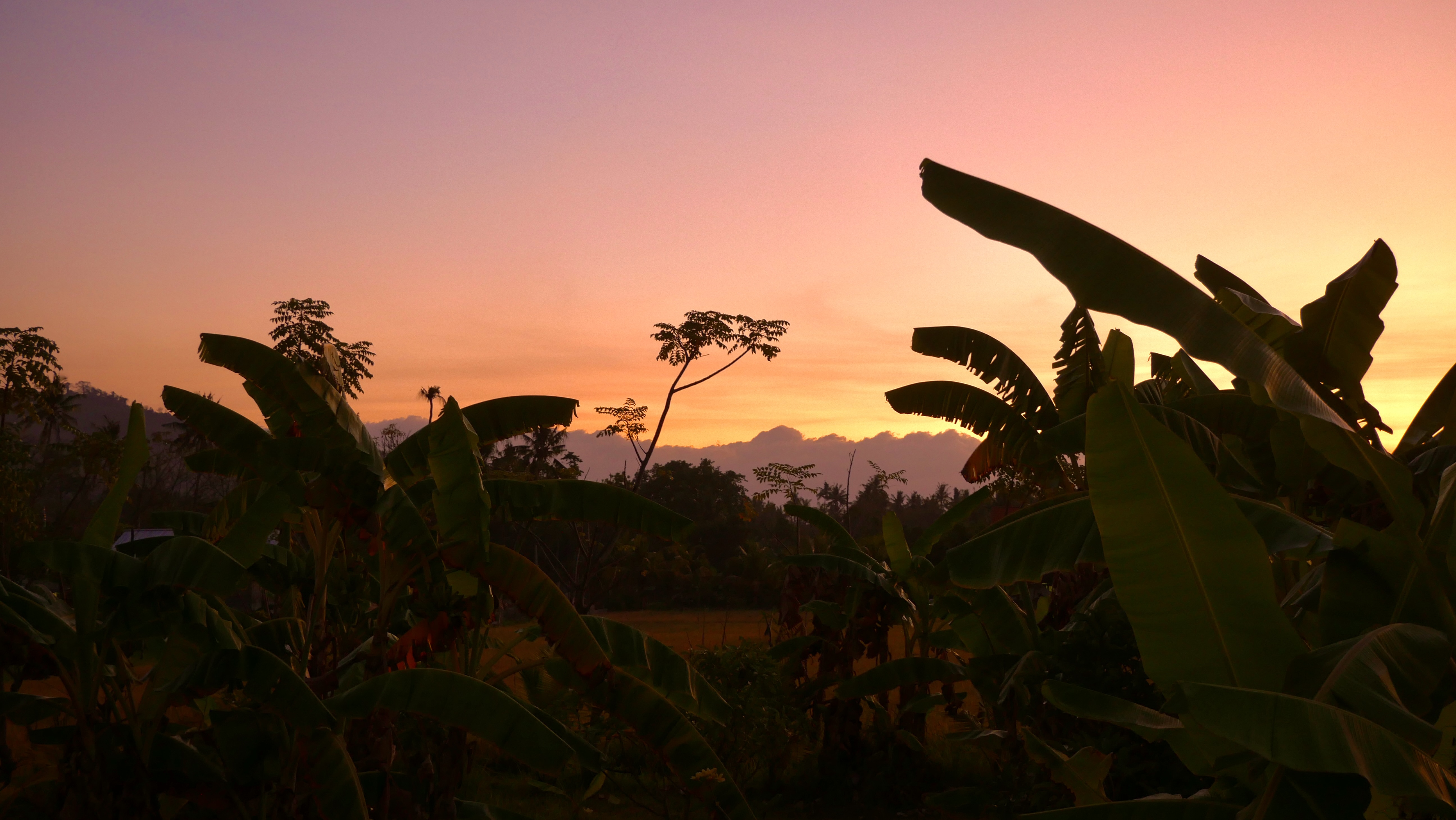
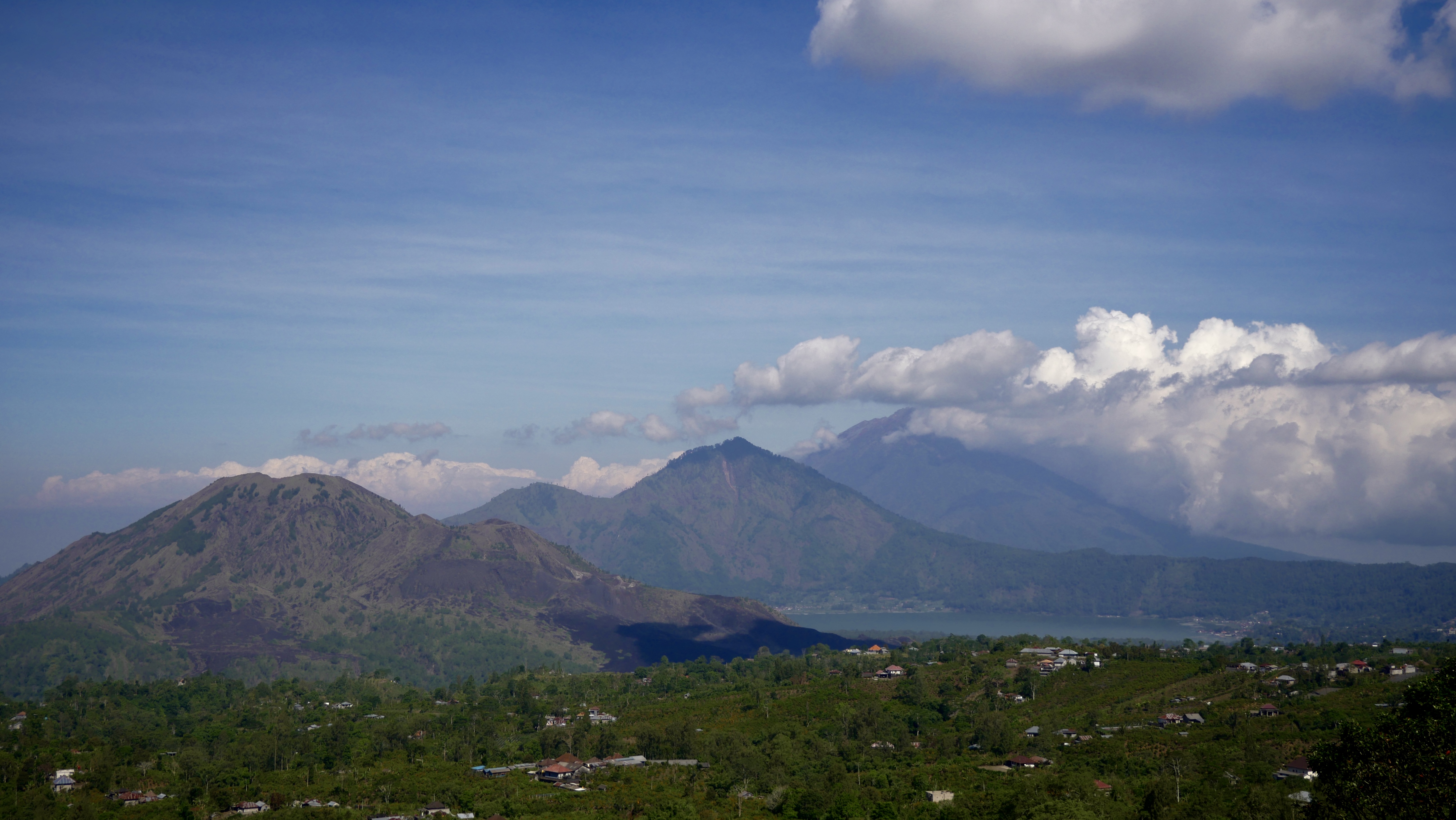
In September 2025, I went to Bali. This place, known as an influencer-yoga-surfer-mindfulness-retreat-location, a paradise. We know Bali from social networks, everyone has at least seen a picture of Bali’s beautiful landscape, its vulcanos, beaches or jungle.
We know cultures differ. They differ in people, behavior, language, religion, food and many more. Southeast Asia was the furthest place I had ever been and I was excited, not to say, a bit scared.
Not only the culture, but also the climate would be different to what I’ve had already experienced on my journeys.
But when we arrived, I felt like I have already been there. I knew the airport (from Instagram), I knew the landscape, the palm trees, the people, the city of Denpasar. I even knew the trash alongside the streets and the traffic jams, between scooters, cars and walking people. Even the sounds. The noise.
The hot sun on my skin was new. The thick and moist air.
But as we drove through the town and into countryside, the nature, I had the feeling of familiarity. I didn't feel like it was my first time there.
It rather felt like diving into a YouTube video about Bali. Everything I saw - the passing villages, rice fields, walking people and the dogs living in the trash - was actually the same I already saw, in various photos and videos. Which is great! To be honest, it's such a great opportunity, to visit a place digitally. To familiarize yourself with a travel destination, before visiting it.
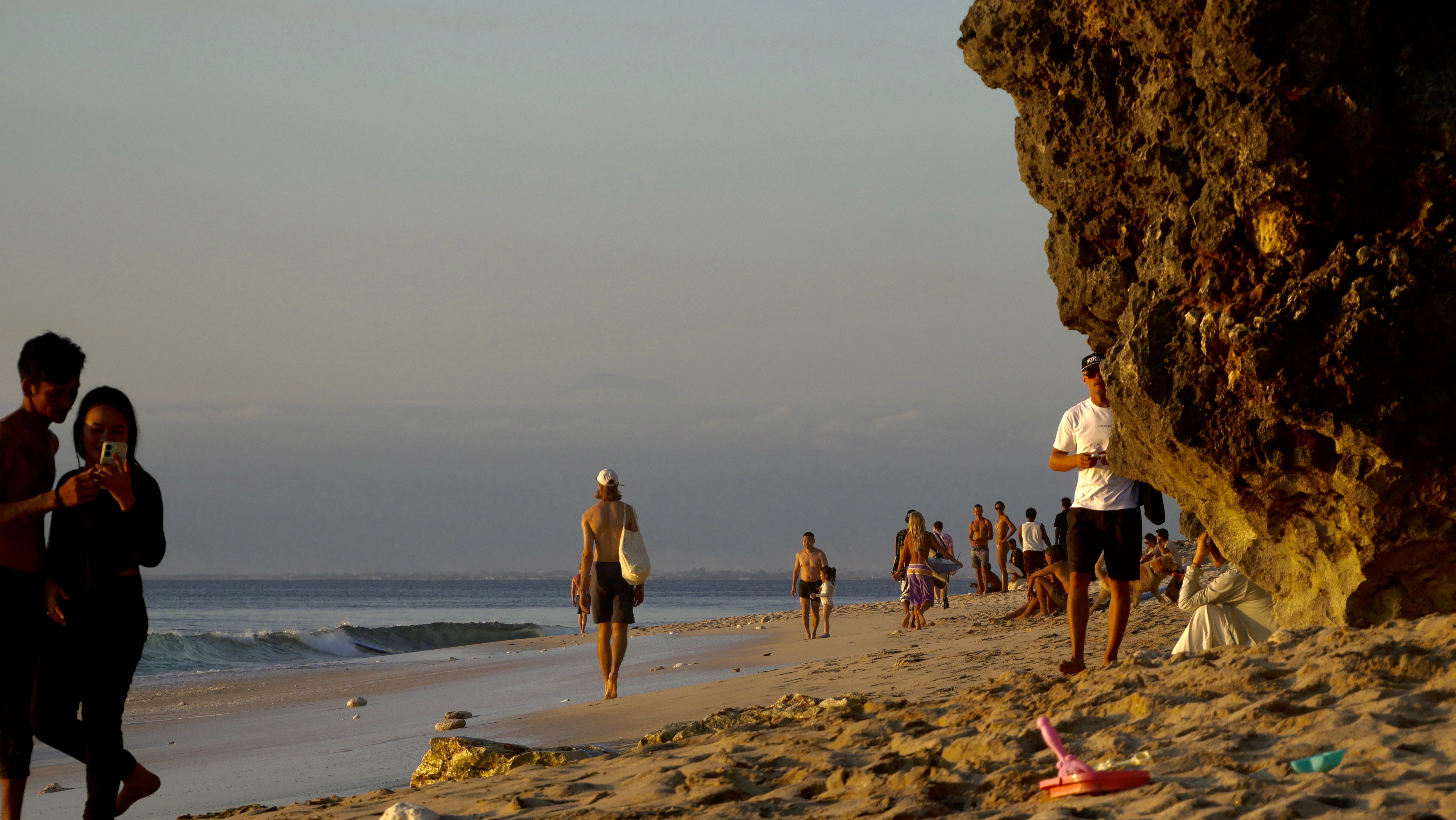
But what does that do to our experience of travel? Of being present?
Walter Benjamin addressed a similar question in his work ‘The Work of Art in the Age of Mechanical Reproduction,’ which he published in 1935. His primary thesis in this work is that a work of art, for example a painting, has its own aura. This aura can only be felt when one stands directly in front of the work of art. If the work of art is reproduced, i.e. photographed, it loses its individual aura (Benjamin, 1935/1969).
Walter Benjamin could not foresee what would happen in the age of social media. That artworks could be reproduced thousands of times. That we could set Van Gogh's Starry Night painting as our wallpaper.
Everything has become much more tangible and immediate. Even faraway places like Bali.
Marshall McLuhan also described our world as a “global village” in which places are no longer thousands of kilometers away and seem unreachable (McLuhan, 1964). Our world has shrunk to a small island on social media.
Places are reproduced hundreds of times over. We know them even though we have never been there. So what is the point of actually being there? What is the difference?
It must be the aura that Benjamin wrote about. The aura of a place that reveals itself individually to each visitor.
We are responsible for sensing it, for craving it, for longing for it. Because if we only visit places on screens, we lose our sense of aura. And with that, the places also lose their aura, because we forget how to sense it.
Reference:
Benjamin, W. (1969). The Work of Art in the Age of Mechanical Reproduction. In Hannah Arendt (Hrsg.) & Harry Zohn (Übers.), Illuminations. Schocken Books. https://web.mit.edu/allanmc/www/benjamin.pdf
McLuhan, M. (1964). Understanding Media: The Extensions of Man. McGraw-Hill.